Tuesday, May 6, 2008

Girls Like Us


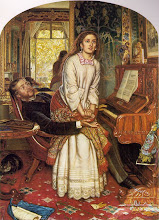
Now that my dissertation recital is behind me, I have immediately turned to time-wasting pleasure reading in the five or so spare minutes a day that have opened up. A couple of months ago I downloaded Pope Benedict's encyclical Spe Salvi and started carrying it around with me, intending to read it on the subway; but it weighed down my bag like kryptonite, and for some reason was equally unapproachable. So when a friend emailed me a link to an article in Vanity Fair that was an excerpt from the book Girls Like Us: Carole King, Joni Mitchell, Carly Simon -- and the Journey of a Lifetime by Sheila Weller (pictured above), I immediately used the back of Spe Salvi to print it out. I devoured the article, and requested the book from the library. It came yesterday, and, in spite of the fact that it's a 500-page hardcover, it feels much lighter in my bag than the few dozen printed pages of the encyclical did.

The book is a compelling read for me, not only because I love the music written by the three artists (especially Joni Mitchell), but also because their lives, as described by Weller, are symbolic of the tremendous disappointment that women have reaped since the 1960s. Although Weller is apparently approving of her subjects' experimentation with the new ways of love, sex, and romance introduced in that era -- ways that ultimately brought grief and even devastation to the three artists (King was married four times; Mitchell bore her only child alone in the charity ward of a Toronto hospital and gave her up for adoption; Simon lived in a codependent marriage to the desperately-addicted James Taylor, until it ended), she also interjects statements that hint that all was not rosy for girls who were "too busy being free." She quotes one of Joan Baez's guitar-strumming college friends, who says obliquely, "There were tears over boys, and a harrowing trip to a doctor who was supposed to be able to 'fix' things . . . It felt like we were both the initiators and the victims of the sexual revolution," and observes ruefully, "If only feminist fortune cookie sentences could, as ordered, change the heart. They couldn't."

The legacy of the sexual revolution has changed the lives, but perhaps not the hearts, of women like me in complex ways. I think sometimes of my fellow female doctoral students and the lives they may be living, and the life I lived before my conversion. I felt as if undergoing devastating loss was part of being a woman, something that a sophisticated and highly-educated woman would have to understand and accept, and that somehow, in the face of irrevocable loss, I would become a superior human being. I wish now, however, that I had never had to lose all that I did.

Friday, May 2, 2008

The Program

This is the program I sang the other night:

Adelaide, op. 46
Maigesang, op. 52, no. 4
An die Hoffnung, op. 94
(Ludwig van Beethoven, 1770-1827)

Trois melodies
Pourquoi?
Le sourire
La fiancée perdue
(Olivier Messiaen, 1908-1992)

Three Scottish Songs
Scots Song
Ballad
The Children
(James MacMillan, b. 1959)

INTERMISSION

Go, Lovely Rose (Roger Quilter, 1877-1953)
To God
So We’ll Go No More A-Roving (Maude Valérie White, 1855-1937)
Silent Noon (Ralph Vaughan Williams, 1872-1958)
As I Walked Out One Evening (Elisabeth Lutyens, 1906-1983)

The Troparion of Kassiani (offered in memory of John Stewart Allitt) (Ivan Moody, b. 1964)

Zigeunerlieder, op. 103
He, Zigeuner
Hochgetürmte Rimaflut
Wisst ihr, wann mein Kindchen
Lieber Gott, du weisst
Brauner Bursche führt zum Tanze
Röslein dreie in der Reihe
Kommt dir manchmal in der Sinn
Rote Abend wolken zieh’n am Firmament
(Johannes Brahms, 1833-1897)

For an encore, I sang a beautiful song by Fred Rogers from Mister Rogers' Neighborhood, "When the Day Turns Into Night."

More on the program later, and thank you for your prayers, which were effective.

Tuesday, April 29, 2008

Blessed Cecilia, Appear in Visions to All Musicians, Appear and Inspire


Many years ago, I dropped temporarily out of college so that I could do something really important, which at that time, so I thought, was performing in off-off-Broadway experimental theater. Along with a close friend, I fell in with a group of Bohemian-living dancers and actors. That I could sing made me cast-able in whatever obscure, abstruse, or opaque – usually all three – spectacle was undertaken. I performed at some well-known venues for this sort of thing, and once got a good review in the Village Voice, but my friendships with this group ended in an unexpected conflagration, and I eventually made my way back to classical singing. Part of this was the influence of the man who would become my first husband. An artist himself, he prodded me to do what I could really do well. So I threw myself into my craft, partly to earn his respect, and partly because, as one of my former Bohemian friends had put it, singing was the only thing I had, and I ought to cultivate it no matter what the circumstances.

Now, many years later, I am about to give my doctoral dissertation recital tomorrow night (which is the reason I haven’t posted much lately). I’m having the feeling of seeing my life as an artist pass before my eyes right now, and I will write more about the recital after it’s over. One thing that makes me glad is that I’m beginning with Beethoven’s great song “Adelaide,” which I started singing when my son was a tiny baby. He knows the song quite well by now, for a two-year-old, and often asks to hear it (he calls it “Aïda”), even filling in the German words at the ends of phrases in his happy loud voice.

Those of you who read this, please say a little prayer tomorrow night that my work will be pleasing both to God and to the adjudicating committee.

Sunday, April 6, 2008

The Artist in Exile


I've reached the stage of life in which I find myself, along with many of the friends of my youth, feeling as though I've left the world of familiar things behind. For me, as for them, the formative years were spent simmering in a heady stew of ambition and art which was hardly tempered by the relative difficulty of our circumstances (Soprannie once had to beg for change to get the subway home from her temp job). It's not much of an exaggeration to say that in my youth and young adulthood I lived for beauty, and spent most of my waking hours trying to figure out how I might, given my own particular situation, best be able to reveal it (not create it, because, as a singer, I was an interpretive artist, not a creative one; and perhaps all creation is really the prerogative of God). I lived for the transcendent experience, which did not exactly help my relationships with those around me. I can't imagine how awful I must have been to live with. At the time, however, I thought art excused everything.

For our third wedding anniversary earlier this week, I gave my husband the DVD of Babette's Feast, which we had gotten out of the library and watched a few months ago. I will never tire of this movie. I first saw it in the early 1990s with my voice teacher of the period (a very influential person in my life who has since become an Alexander technique teacher; more about this in another post). Many commentators have noted the film's Catholic and eucharistic themes, but it is also very much a movie about what it means to be an artist.

Babette has had to leave the world of the familiar as a political refugee; indeed, her husband and son have been killed in the French Revolution of 1871. She ends up on the cold, stark, forbidding shores of Jutland, Denmark, as the cook and housekeeper to two pious Calvinist sisters. But it is not revealed until the end of the film that she has also left behind the glittering world in which she was a celebrated artist who practiced her art freely. This sense of personal and artistic exile is something that my friends and I, trained in music and now practicing it less and less as we take on more and more of the responsibilities of family life, are familiar with, and there is a sense of loss as we give up more and more of our art. I, as a lowly adjunct lecturer at a large urban university, teaching one of my department's 27 sections of Music 101, am luckier than many of my friends; I have a socially-approved means of making the transition from being an artist to being something else. Becoming a teacher, in the eyes of the world, seems like a logical step in the life of a semi-obscure musician, while becoming a mother seems like a severe derailment.

Philippa, the sister in Babette's Feast who had once considered a life on the opera stage, tells Babette something beautiful: that in heaven, she will be the artist God has meant her to be. I pray that my friends and I will find a way to understand our own lives in light of this blessing, even if becoming the artists we feel we were meant to be eludes us in this life.

Thursday, April 3, 2008

A Folle Journée in the Life


We finished our section on Le Nozze di Figaro today in Music 101. There were some wonderful things in the production we watched on DVD, a live performance given in 1993 at the Theatre du Chatelet in Paris, with John Eliot Gardiner conducting (the DVD is pictured above). I particularly loved the moment during "Pace, pace, mio dolce tesoro," the beginning of the Act IV Finale, in which Figaro confesses to Susanna that he knew her by her voice (a lovely conceit itself): Alison Hagley, as Susanna, sings "La mia voce?" ["My voice?"] in the smallest, sweetest pianissimo, giving the sense that Susanna is not only surprised, but touched, even overwhelmed, by the love Figaro has for her on their wedding night, at the close of a day of total madness, doubt, confusion and deceit.

My formerly ultra-Orthodox Jewish student suggested that Figaro was biblical. He related the exchanging of identities between the Countess and Susanna to Leah being exchanged for Rachel on Jacob's wedding day; the Count forcing Cherubino into the army to David sending Uriah, Bathsheba's husband, to the frontlines to be killed; and the moment in Act IV when the Count, thinking his wife to be his maid, gives her a ring as a token of his affection to the Genesis account of Judah and Tamar. I can't say I agree, but I found the notion intriguing.

In other Figaro news, I was suprised the other day to find my office-mate talking with a baritone whom she'd engaged to substitute-teach one of her voice classes. I recognized him as the Figaro from the long-ago production in which I sang with my good friend Soprannie. He didn't recognize me, I have a different last name now, and I was too shy to mention those far-off days, so we met one another as two anonymous voice-teaching adjuncts at a big public university.

Sunday, March 30, 2008

The Children

In my upcoming dissertation voice recital, I'm doing the recently-published Three Scottish Songs by James MacMillan. MacMillan has chosen texts from the work of poet William Soutar, who was a major figure in the Scottish Literary Revival of the early twentieth century in spite of the fact that he was confined to bed for most of his life with ankylosing spondylitis. One of these poems, "The Children," is about the Battle of Britain; Benjamin Britten set the same text in his cycle Who Are These Children?, composed in the late 1960s.

Upon the street they lie
Beside the broken stone:
The blood of children stares from the broken stone.

Death came out of the sky
In the bright afternoon:
Darkness slanted over the bright afternoon.

Again the sky is clear
But upon the earth a stain:
The earth is darkened with a darkening stain:

A wound which everywhere
Corrupts the hearts of men:
The blood of children corrupts the heart of men.

Silence is in the air:
The stars move to their places:
Silent and serene the stars move to their places.


There is a sixth stanza too, which MacMillan chose not to set:

But from the earth the children stare
With blind and fearful faces:
And our charity is in the children's faces.


The song is stark and chilling, with a sing-song, music-box effect. I'm not sure if it would be more or less disturbing with the addition of the last stanza. Without it, the deaths of the children bombed from the air seem to have occurred against the impersonal backdrop of unchanging nature. With it, we are all invoked and implicated.

Thursday, March 27, 2008

Music and Morals: Bach


Around the time that my first marriage was ending, I started working with yet another new voice coach. (Not exactly voice teachers, coaches are generally pianists who have a great deal of familiarity with and, at best, love for and insight into the classical vocal repertoire; their job is to help singers learn how to put it across in stylistically appropriate ways. Voice teachers mostly stick to technique.)

In addition to being a monster pianist, this coach possessed several unique characteristics. He hated opera, but coached it to pay the bills; his real love was art song. It was mine too. I had long dreamed of having a career as a recitalist, but my teachers had told me that it wasn't possible for an American singer to do so. So I had jumped onto the opera treadmill in the hope of having a great career that would one day permit me to do the music I really wanted to do -- the sort of career that the very fortunate (and deserving) Dawn Upshaw has had.

When my first marriage ended, however, I found that I no longer had the heart for opera. I just couldn't go on another audition. I was five minutes late for one of the last auditions I ever took, with a famous genre-specialist conductor who lived overseas, but whose tours to the cultural centers of the United States and recordings of rarely-performed operas were wildly popular among music enthusiasts. When his people squeezed me in despite my throwing off the scheduled list of singers by five minutes, the famous man talked on his cell phone during my entire aria. My manager was appalled by the disrespect I had implied by being late, and I wondered myself if there weren't something Freudian about it, but my voice teacher simply rolled her eyes when I told her what had happened. "He's lucky you weren't five hours late," she said. "This is New York."

In the meantime, as my opera career and my life were unraveling, I began to feel a strong rapport with my new, opera-hating coach. I even asked him to play my last few opera auditions as my accompanist, because, in spite of the fact that he hated the repertoire, he could play the hell out of it. In private, we worked together on music that we both loved -- songs by Brahms, Schumann, Messiaen -- and talked idly of doing recital tours.

Another thing that was unique about this coach was that he was straight. In fact, he was married, and I had at one time heard vague rumors that he had been abusive to his wife, who sang at the Metropolitan Opera. They seemed to be happy enough now, though she was often away on singing jobs.

The weekend after my first husband moved out, the coach called me up. His wife was out of town, and he wanted to pay me a visit. I was distraught that morning, and, if I recall correctly, drinking in bed. I thought, why not? But then somehow I got hold of myself and called him back to ask him not to come. I don't know how it happened that I was seized by a sudden attack of virtue -- I'd hardly been a paragon of it lately -- but I was extremely relieved. I never saw him again.

Something that the coach said to me during our work together stands out in my memory. Music, he said, was about the moral virtues. To illustrate this point, he told me that he woke up at 5 AM every day to play Bach's two-part keyboard inventions -- perhaps the purest, most cerebral, and, in a sense, the loneliest and most chaste music that the Western art music tradition has ever produced. (To listen to Glenn Gould playing Invention no. 2 in C minor, go here.)

Monday, March 24, 2008

Music and Morals: Beethoven


My brother G., a music critic and composer, gave a talk to my Music 101 class last week about Beethoven, in the process greatly expanding my students' knowledge of Beethoven from "the composer who was deaf" to the representation not only of Romantic genius, but also of modern man with all his hopes, fears, conflicts, and inner turmoil. Among other recordings, G. played a 1944 radio broadcast of Wilhelm Furtwängler conducting the Berlin Philharmonic in a performance of the "Eroica" Symphony in Vienna, an occasion at which, as G. noted, there were almost certainly Nazi party officials in the audience who knew they were losing the war. G. asked the class to ponder who then was the "hero" in the "Heroic" Symphony. His lecture, as you might guess, was a hands-down success.

Like many people, I love Beethoven. He seems to me the apotheosis of God speaking his own divine music through the brilliant, flawed mouthpiece of fallen man; indeed, I feel so much sympathy for Beethoven as a person that it's sometimes painful for me to listen his music. His biographer Maynard Solomon has written (rather movingly, I think) that Beethoven "wanted understanding [from future generations], as though sensing that both forgiveness and sympathy inevitably follow in its train."

Solomon goes on:

"As an artist and as a man, [Beethoven] knew the healing power of communication and the cathartic effect of shared fears. 'All evil is mysterious and appears greater when viewed alone,' he wrote in a diary entry of 1817. 'It is all the more ordinary, the more one talks about it with others; it is easier to endure because that which we fear becomes totally known; it seems as if one has overcome some great evil.'"

Saturday, March 22, 2008

La Folle Journée


I had planned on showing my Music 101 class Ingmar Bergman's wonderful film of The Magic Flute next week in our section on classical opera, but after hearing the "recognition" sextet from Act III of Le Nozze di Figaro, my students wanted more. Preparing for next week's classes, when I'll show the opera, I recall the many performances of Figaro that I attended at the Metropolitan Opera in the 1990s. It was customary for us young freelance singers to buy $25 tickets in Family Circle, to train our opera glasses around the upper-tier audience before the chandeliers ascended and the curtain rose to see what friends, colleagues, and rivals were in attendance, and (if you were a soprano, or the boyfriend or husband of one) to leave after Susanna sang her fourth-act aria, "Deh vieni, non tardar," because it's a long opera, and we had to be at our temp jobs in the morning.

Thursday, March 20, 2008

Holy Thursday


'Twas on a Holy Thursday, their innocent faces clean,
The children walking two and two, in red and blue and green,
Grey-headed beadles walk'd before, with wands as white as snow,
Till into the high dome of Paul's they like Thames' waters flow.

O what a multitude they seem'd, these flowers of London town!
Seated in companies they sit with radiance all their own.
The hum of multitudes was there, but multitudes of lambs,
Thousands of little boys and girls raising their innocent hands.

Now like a mighty wind they raise to heaven the voice of song,
Or like harmonious thunderings the seats of Heaven among.
Beneath them sit the aged men, wise guardians of the poor;
Then cherish pity, lest you drive an angel from your door.

-- William Blake

Wednesday, March 19, 2008

New Order


This Lent, I'm supposed to have renewed my inquirer status with a lay Catholic confraternity which lives the rule of Saint Francis. I'm not quite sure what to do about this, however, because, while I felt a great attraction for this group when I first found out about them last year, my enthusiasm has waned somewhat. This is partially because I am so overworked and tired, and partially because of a couple of comments I've received from some of the group's members, which, while well-intended (and the people who made them kind and holy), made me feel there might be some disconnect between their theology and mine.

One said, on the occasion of my second pregnancy loss in four months, that if the child had been born he might have eventually turned away from God, which was supposed to make me feel better, the presumption being that the child is in heaven now but might not have gotten there had he lived. Another told me, after a look at this blog, that I am clearly suffering from post-traumatic stress disorder as a result of my abortion seventeen years ago, and helpfully suggested that women who have had abortions are more likely to suffer miscarriage. (While I'm certainly open to the idea of chastisement, in this case I felt I had to point out the lack of evidence for her assertion, as well as the fact that miscarriage is extremely common even in women who have led blameless lives. It's certainly tempting to imagine that God is doling out karma and just desserts to grievous sinners like myself, but it seems to me that such an easy notion is in direct contradiction to everything Christ said and did, so I doubt it.)

Perhaps I should look into becoming a Third Stream instead of a Third Order Franciscan. In the meantime, however, I would be most grateful if any reader of this post would pray for my discernment in this matter.

Friday, March 14, 2008

I Think I've Just Found My Favorite Blog.

If you're a Catholic intellectual mom, you might like it too.

Saturday, March 8, 2008

Arirang


I've tried twice over the past few days to post a youtube video link of the New York Philharmonic's February 27 concert in North Korea, but the web gods have not been cooperative. My writing class students, several of whom are South Korean immigrants, followed the press coverage of the historic event, and our class will have the privilege next week of hearing an informal lecture by the New York Times cultural reporter who accompanied the orchestra to Pyongyang. I was deeply moved by a video clip of the audience's response to the beautiful Korean folksong "Arirang," which the Philharmonic played as a last, unannounced encore. Condoleezza Rice opined that playing Dvorak (his New World Symphony was on the program) would not do much for detente, but the sight of the audience and the musicians waving to each other suggests another possibility: that detente begins in the heart. As John Deak, the Philharmonic's principal bassist, said:

"Half of the orchestra burst into tears, including myself, and we started waving back at them and suddenly there was this kind of artistic bond that is just a miracle. I'm not going to make any statements about what's going to change . . . . Things happen slowly. But I do know that the most profound connection was made with the Korean people tonight."

You can watch a video of the Philharmonic's concert here.